
BOUDOIR VS. EROTICA
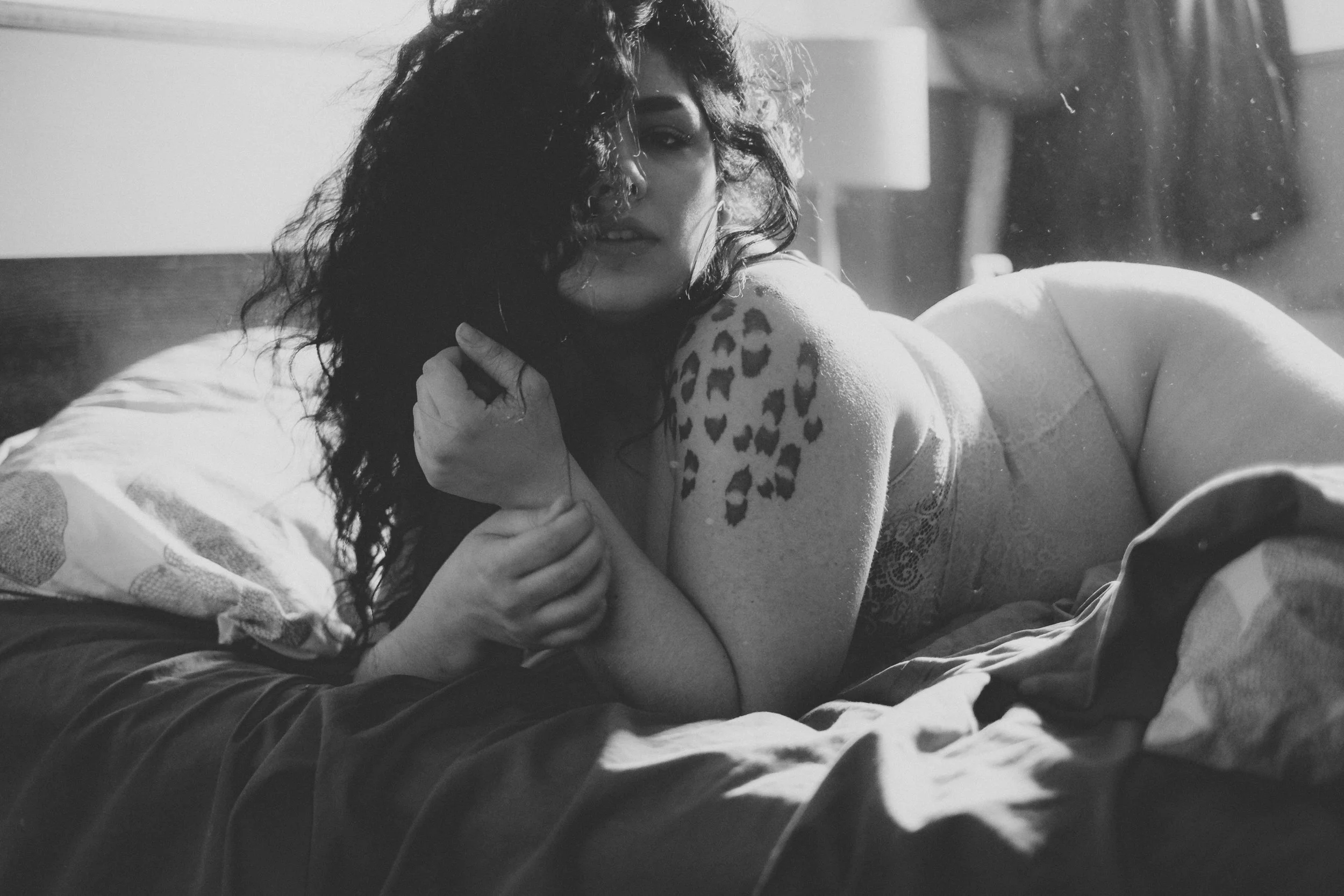
Being a Boudoir Photographer, I get asked this about this topic a lot, and I thought it would be helpful to clear up some of the misconceptions!
In the world of professional photography, few genres are frequently misunderstood or as conflated as Boudoir and Erotica. To the untrained eye, both involve intimate settings and varying degrees of undress. However, for both the photographer and the subject, the intent, atmosphere, and story being told are worlds apart!
The Art Of The Bedroom.
The word boudoir is French in origin - for a woman’s private sitting room or dressing room. Historically, it was a space for intimacy, reflection, and preparation. Modern Boudoir photography stays true to this heritage. It is an exploration of sensuality, rather than sexuality.
Boudoir is often a journey of self-love. It’s about how a person feels in their own skin, celebrating curves and authenticity, and finding beauty in the subtle. It isn’t about the act, it’s about the essence.
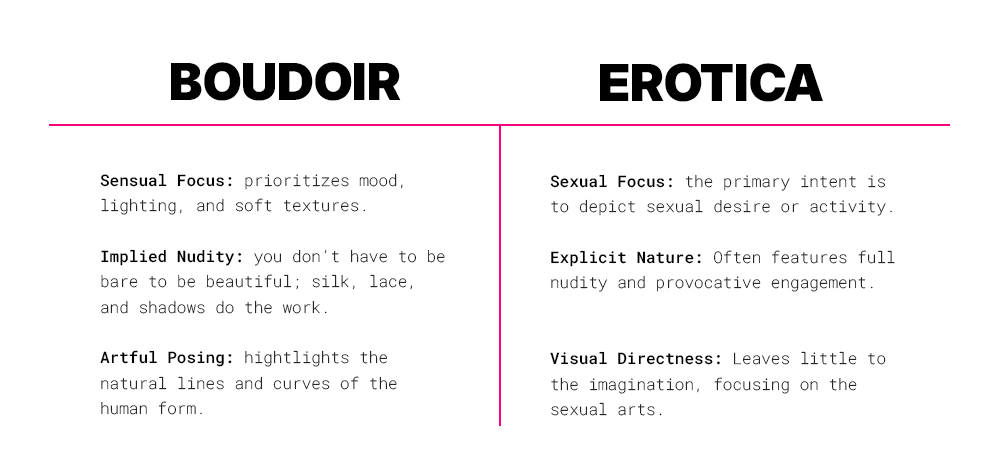
Where do you fit?
One common misconception is that Erotica is simply “further along” the scale than Boudoir. In reality, they are completely different genres of photography! Erotica is often designed for an external viewer - to provoke a specific physiological or psychological response. Boudoir on the other hand, is usually created for the person in the photos. It is an empowering mirror to held up to one’s own confidence.
Comfort Zones + Boundaries.
Boudoir is an experience of trying something new, pushing your boundaries in a safe, artistic environment. It allows for a gradual opening up without the pressure of explicit performance.
For many of my clients, the suggestive and implied nature of Boudoir is where the true magic happens - where the mystery creates the beauty.
Final Thoughts.
Boudoir is a celebration of the self through the sensual lens, while Erotica is a direct exploration of sexual themes. Knowing the distinction is vital for setting expectations in one of our photo sessions! Both have their place in the lexicon of art, but understanding the “why” behind the lens makes all the difference.